
Something has been shifting quietly on restaurant wine lists — and I’ve been watching it happen. Chillable reds, once a raised eyebrow, are now the most interesting conversation at the table.
Not long ago, a sommelier’s recommendation leaned toward structured, age-worthy reds — wines that demanded patience, occasion, and perhaps a certain reverence. The kind of wine you planned around.
That is starting to change.
This isn’t a casual trend. It’s a convergence — of climate, of generational change, and of a wine world finally listening to how people actually want to drink.

The Decline of the Serious Red
For decades, the dominant language of red wine revolved around weight and age.
The 100-point scoring system rewarded concentration, depth, and tannic structure — the kind of wine that needed years in a cellar before it would reveal itself. Baby Boomers built wine collections around that vision, and the industry followed.
But it is no longer the only way people want to drink.
A major U.S. wine consumer study released in 2025 tells a clear story: Millennials have officially overtaken Baby Boomers as the largest wine-consuming generation, representing 31% of all consumption versus 26%. And their relationship with wine is fundamentally different.
Napa Valley winemakers are seeing it firsthand — younger customers are gravitating toward blends, lesser-known varieties, and wines meant to be opened tonight, not five years from now. The cellar-worthy Cabernet — bought young, stored for a decade, opened on a milestone — is no longer the aspiration for most.
Global research on drinking behavior adds another layer: 67% of Gen Z wine drinkers say they are actively moderating their alcohol consumption. They are drinking less, but they are drinking with intention. When they choose a bottle, they want it to be right for the moment — not a commitment to a ritual they didn’t ask for.

A Warming World, A Lighter Wine
While consumer preferences were shifting, something else was happening in the vineyards.
Global warming has moved faster in wine country than almost anywhere else. The science is unambiguous: grape harvests across the world’s major wine regions have advanced by two to three weeks over the past forty years. Warmer growing seasons mean grapes accumulate sugar more rapidly — and more sugar means higher alcohol.
That shift hit every major wine region. In France’s Languedoc-Roussillon, for instance, alcohol levels in some wines rose by the equivalent of 2 to 2.5 degrees Celsius since 1984 — not because winemakers wanted heavier wines, but because the climate delivered riper fruit whether they asked for it or not.
For producers who had built their reputations on elegance and restraint, this was a problem — and it called for a new kind of response.
The vineyard was changing. And in the cellars, winemakers were ready to respond.
Born to Be Chilled: The Making of Chillable Reds
That response took shape in a very specific way.
In the vineyard, that often looked like harvesting earlier than tradition dictated — before sugar levels climbed too high, trading a little ripeness for freshness and lower alcohol.
In the cellar, it looked like shorter skin contact, minimal or no oak, and techniques like carbonic maceration that ferment the grape from the inside out, extracting color and aroma while leaving tannin largely untouched.
The result, in each case, is a wine built not for the cellar or the sideboard — but for the table, right now, slightly cool and entirely alive.
That combination of decisions — in the vineyard and in the cellar — is exactly what produces a chillable red. And what began as a quiet philosophy among a handful of producers has become a global shift.
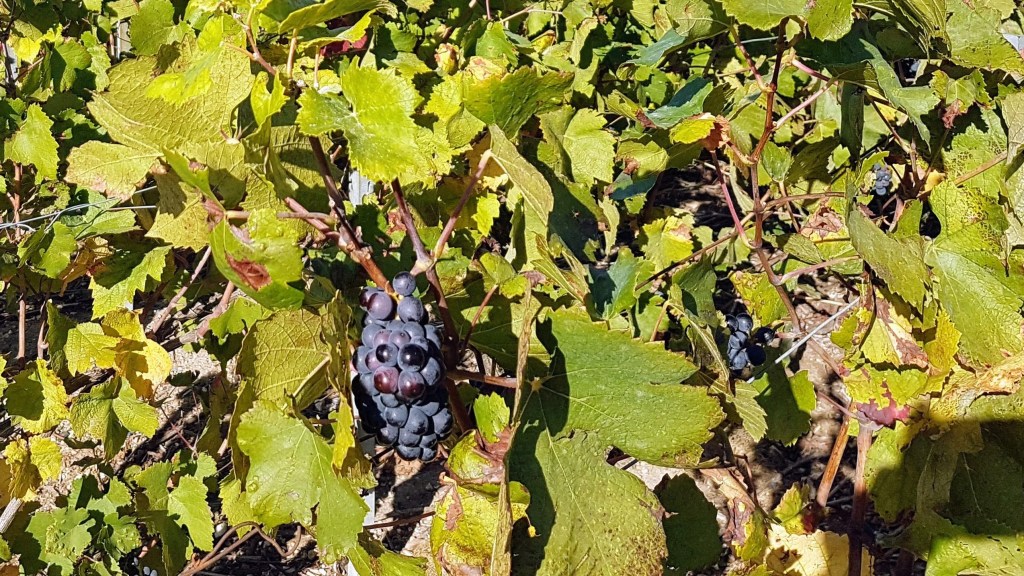
The Grapes Behind Chillable Reds
Of course, not every red wine suits a chill. The architecture of the wine is what matters — low tannin, high acidity, and minimal oak are what allow a red to thrive when served cool. Chill a high-tannin wine and the tannins tighten further, turning from structure into astringency.
Specifically, the grapes that shine when served between 55–60°F share a common profile: freshness over weight, fruit over oak, energy over gravity:
Gamay — Beaujolais, France
The original vin de soif, or wine of thirst. Juicy, low in tannin, with a signature lift of wild strawberry and violet, it is the grape that defined this category long before the category had a name.
Pinot Noir — Cool Climate Regions
It might surprise you here. Most people reach for it at room temperature — but a lighter, more fruit-forward style from cool-climate regions opens up beautifully with a brief spell in the fridge. The fruit becomes more precise, the acidity more alive. The key word is style: a lighter Pinot rewards a chill; a richer, more structured one does not.
Cinsault — Southern France & South Africa
Then there’s Cinsault — Soft, approachable, and generously red-fruited — strawberry, raspberry, a whisper of rose petal. Naturally low in tannin, it drinks easily and comfortably at cellar temperature, with none of the grip that would resist a chill.
Zweigelt & St. Laurent — Austria
Austria is, at its heart, a white wine country. But I’ve been drinking its reds for years — long before “chillable” became a category. There’s something about wines grown in cool mountain air that carries an innate freshness no winemaking trick can replicate.
Zweigelt is where to start — juicy cherry, a whisper of spice, soft tannins. Built for pleasure, not ceremony.
But if you want to go deeper, find a St. Laurent, Austria’s best-kept secret. Related to Pinot Noir by DNA — sharing its love of cool climates and its notoriously difficult temperament in the vineyard — but distinctly its own: darker in color, more intensely cherry-driven, with a silky weight and quiet spice that reveals itself slowly in the glass. Serve it cool. Take your time.
*Curious to explore further? The Austrian Wine official site is an excellent place to start: austrianwine.com
One Simple Tip for More Chillable Reds
Not sure where to start? Check the label. Chillable reds tend to clock in under 13% ABV — lighter alcohol is often the clearest sign that a wine was made to be fresh, not heavy.
Chillable Reds in the Age of Now
There is one more force behind the rise of chillable reds: the speed at which wine is now discovered and shared.
For previous generations, wine knowledge traveled slowly — through critics, through restaurants, through patient accumulation over years. A bottle earned its reputation through scores, provenance, and the authority of the cellar. Discovering a great wine often meant waiting for it.
That world has not disappeared. Yet alongside it, something faster has grown.
Today, a bottle of Frappato can go from obscure Sicilian specialty to sold-out on the strength of a single well-placed post on social media. A natural wine bar in Portland or Paris introduces a grape no one has heard of, and within weeks it appears on lists across three continents.
Discovery is now immediate, social, and visual — and the wines that travel best in this environment tend to be the ones that are approachable on first encounter, beautiful in the glass, and easy to reach for on any given evening.
This shift in how people discover wine has quietly reinforced the rise of chillable reds. A wine that needs ten years and a decanting ritual to reveal its character no longer fits this moment. A wine that is vivid, fragrant, and ready the moment it’s poured — that does.
None of this means depth has lost its value. It means that a new kind of depth is being recognized: the depth of a wine that feels genuinely alive in the glass, right now, without ceremony.
How to Serve Chillable Reds
For lighter reds, aim for 55–60°F (13–16°C). About 45–60 minutes in the refrigerator, or 15 minutes in an ice bucket with water and ice.
For medium-bodied reds — Pinot Noir, Barbera, Grenache, Valpolicella — 60–63°F (16–17°C) is the sweet spot. Thirty minutes in the fridge is usually enough. Pour, and let the wine warm naturally in the glass.
Above all, one thing to avoid: pulling a bottle straight from a cold refrigerator (35–38°F) and serving immediately. At that temperature, nearly everything — aroma, fruit, structure — is suppressed. Let it rest on the table for 10–20 minutes first. The glass will do the rest.

Chillable Reds — A Way of Living, Not a Trend
The rise of chillable reds is not a rejection of serious wine. The collectors, the cellar-builders, the patient drinkers — they are not going anywhere.
But I think about fashion sometimes when I think about wine. Watch any film from the mid-20th century and everyone is dressed for an occasion — suits, gloves, hats. Clothes that announced something.
Today, the most elegant people I know wear something that looks effortless. Not careless. Effortless. The clothes fit the life, not the other way around.
Wine is moving the same way. Similarly, this isn’t a generational shift belonging to the young. It’s a cultural one we’re all part of — whatever age, whatever glass. The wine doesn’t need to announce itself. It just needs to belong in the moment.
The wine world is not getting less serious. It is getting more human.
Leave a Reply