
This spring, the peonies in my garden opened three weeks early, blazed for a few days, and dropped every petal overnight. The roses that should wait for May and June started blooming in March. Flowers are confused.
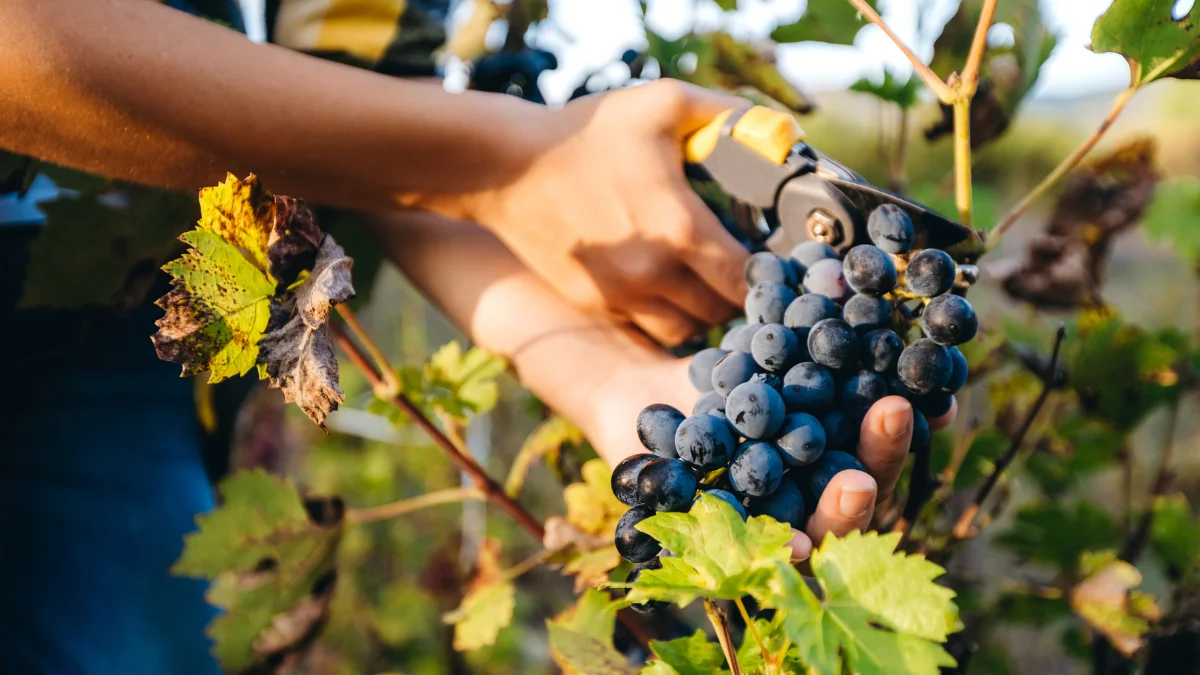
If my little California garden can’t keep its calendar straight, imagine what’s unfolding across the world’s great vineyards right now. The 2026 wine harvest is breaking records, with the earliest picks across Europe in centuries.
Harvest, Already?
I follow a handful of Champagne houses on Instagram. Every year when the first harvest photos start appearing, I’m always thrilled, as most wine lovers are.
Watching dormant vines come to life, budding, flowering, setting fruit, passing through veraison, and finally reaching harvest, is nothing short of a wonder.
So when this year’s harvest posts started filling my feed, I swiped through every image and read every caption, as I always do. And then it hit me. Wait, it’s just the first week of August. Harvest already?
Well, looks like it actually happened. A house in Montgueux of Champagne region received special permission to begin picking on August 6th after acidity levels in their Chardonnay started dropping too fast to wait. The official start for the Champagne region followed on August 12th, still the earliest in its recorded history.
Champagne is a region I hold close, and every time I’ve visited, producers have shared their real concerns about harvests creeping earlier. This year, it wasn’t just earlier. It was the earliest.
Then, days later, Burgundy. Chardonnay was picked at the Grand Cru Montrachet vineyard on August 13th, the earliest still-wine harvest in the region’s recorded history, beating a record set in 1556.
I started digging, and the pattern was everywhere. Bordeaux’s grapes for Crémant sparkling wine came in the first week of August, a historically early start. Catalonia in Spain picked sparkling grapes on July 22nd, the earliest harvest ever recorded in the region.
Franciacorta in northern Italy followed on July 30th, the earliest start on record and the first time the region has ever picked in July. The grape harvest in Rioja officially began on August 6th, the earliest date ever recorded in the region.
It wasn’t just a European story, either. Sonoma County here in California started its earliest harvest in at least forty years. Central Coast picked sparkling lots as early as June 30th.
In Napa, early heat waves and erratic spring weather pushed the grapes to mature weeks ahead of schedule, forcing an unusually early harvest. I drove through Carneros just last week, the second week of August, and was stunned to see the white varieties nearly all picked already.
From Burgundy to Rioja to Napa, the story was the same: the grapes couldn’t wait.
The Race Between Sugar and Acid
For producers, harvest is the most critical call of the year. So what does it actually mean when the grapes can’t wait?
Sugar and acidity are the first things winemakers watch when deciding when to pick. Sugars build, which become alcohol in wine, giving it body, warmth, and richness. Acidity does the opposite work: it gives wine its freshness, tension, and ability to age.
In a good year, grapes reach a natural balance of flavors, tannins, sugar, and acid, but extreme heat during growing season breaks that balance. Sugar races ahead before all other components have matured. Acidity gets cooked out of the grape.
Every harvest, winemakers face the same difficult choice: pick early to preserve acidity—knowing the flavors aren’t fully there yet—or wait for richer complexity and risk losing the very freshness that defines the quality of wine.
This year, the heat left almost no room to wait. Europe endured three separate heatwaves between May and July. France recorded its hottest day in history on June 24th.
Reshaping the Wine Harvest
Nobody in the business treats these extreme heat patterns as a passing phase. Rather, the industry is pivoting toward practical solutions.
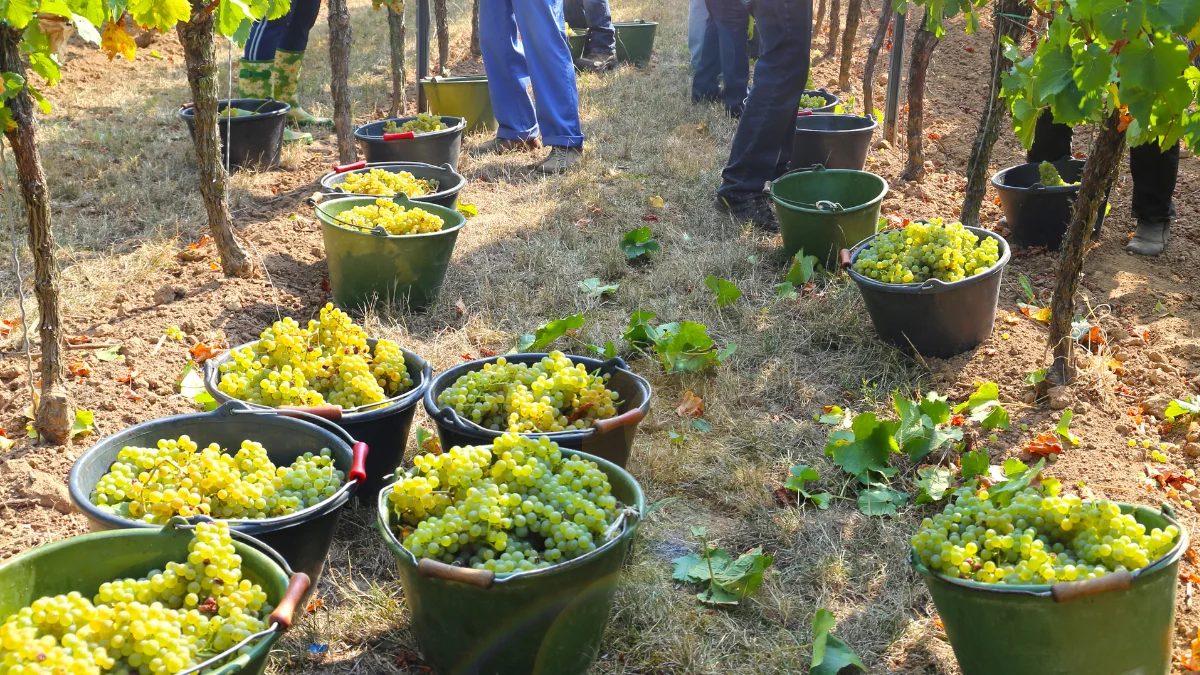
In Champagne and Burgundy, regions that never needed to worry about heat during harvest, crews now pick at dawn or under floodlights at night to keep grapes cool. It’s a routine practice in warm climates like Australia and California, but seeing it in northern France says something about how the conditions are changing.
The deeper changes are more telling. Bordeaux, one of the most tradition-bound wine regions on earth, recently approved six new grape varieties for its appellations, including Touriga Nacional and Marselan, all late-ripening and heat-resistant.
It’s the first time outside varieties have been allowed into Bordeaux appellations. Estates are also pulling back on Merlot, which ripens too fast in today’s heat and pushes alcohol levels too high, in favor of later-ripening Cabernet Sauvignon and Petit Verdot.
In Burgundy, producers are testing drought-resistant rootstocks. In Rioja, vineyards are moving to higher elevations to chase cooler air. Some estates across Europe are adopting late pruning, deliberately delaying the vine’s growth cycle to push harvest into a cooler window of the season.
Yet there are the risks no one can plan for. In Champagne, spring frost wiped out roughly 30 percent of the crop before the heat even arrived. This summer’s wildfires near Bordeaux destroyed over 42,000 hectares of forest and raised real concerns about smoke taint. That margin of safety sadly gets thinner every season.
Approaching Wine Differently
When the vineyard changes, winemaking follows. And when winemaking changes, the way we read wine has to shift with it.
Tradition Evolves
For centuries, European wine laws codified what made each region distinct: grapes, soils, and methods. Bordeaux meant Merlot and Cabernet. Burgundy meant Pinot Noir and Chardonnay. These laws didn’t just protect tradition. They defined identity.
But seeing even Bordeaux approve new grape varieties tells you that the regulations defining a region’s signature grapes, farming practices, and winemaking standards are no longer fixed. They’re evolving too.
Beyond the Vintage Chart
For decades, wine lovers leaned on vintage charts, those tidy grids that scored entire regions by year. A “great vintage” meant you could buy almost anything from that region and trust it.
But in a climate this erratic, the variation within a single vintage has grown too wide for any one score to capture. Two estates five kilometers apart may have made completely different decisions about when to pick, and eventually what’s in the bottle.
Craftsmanship, More Than Ever
The old shorthand, good region plus good year equals good wine, is losing its grip. What matters more now is how each producer responds to the season they’re given.
In 2026, that means reading the heat, picking at the right moment, and knowing how to coax balance out of early-harvested fruit. Winemaking has always counted, but never more than now.
What’s Coming to Your Glass
The signature styles that define each region may begin to look a little different for those of us who love wine.
Sooner or later, Burgundy’s hallmark precision could carry a little more fruit. Champagne’s bright acidity may turn a little rounder, softer. If this shift feels striking even from the outside, I can only imagine what it means for the people who have tended these vines across generations.
Yet, adaptation is deeply woven into the history of wine. We’ve always found new ways forward. This time won’t be different.
The calendar may have broken. The craft hasn’t.
That is why I still look forward to what comes next in the glass.
To the resilience behind every new vintage, Santé.