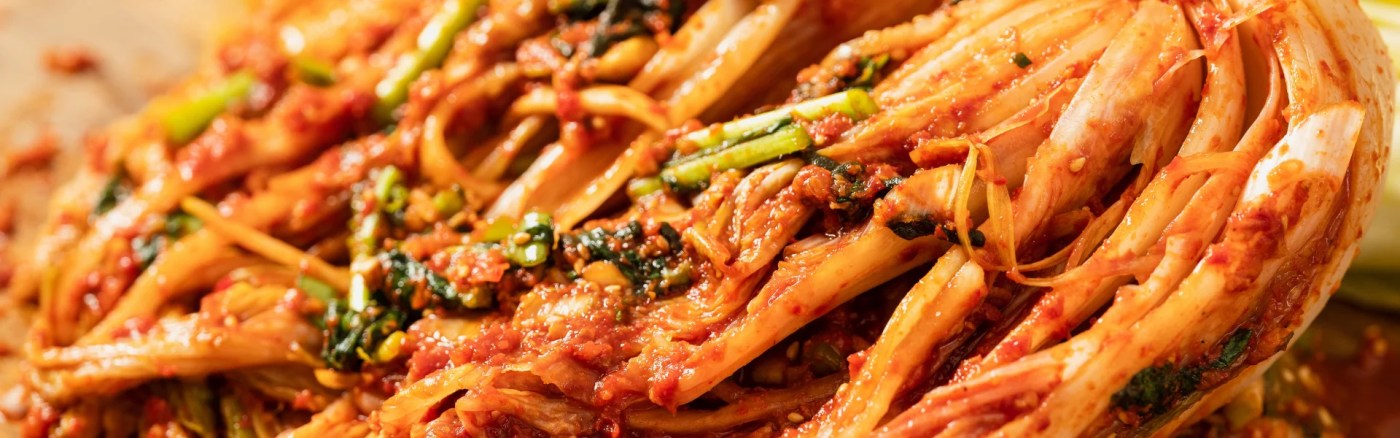
I love kimchi. It is an obsession, perhaps.
Even after living in the States for most of my adult life, I still make my own kimchi.
Korean grocery stores here in Northern California carry a generous selection, much of it genuinely good. Buying is easy, and I often do. Yet I cannot stop tying the apron, salting the cabbage, mixing the paste.
Like wine or cheese, kimchi is a craft shaped by nature, human hands, and time. The closer I look, the more I see that wine and kimchi run on the same logic.
What Kimchi Actually Is
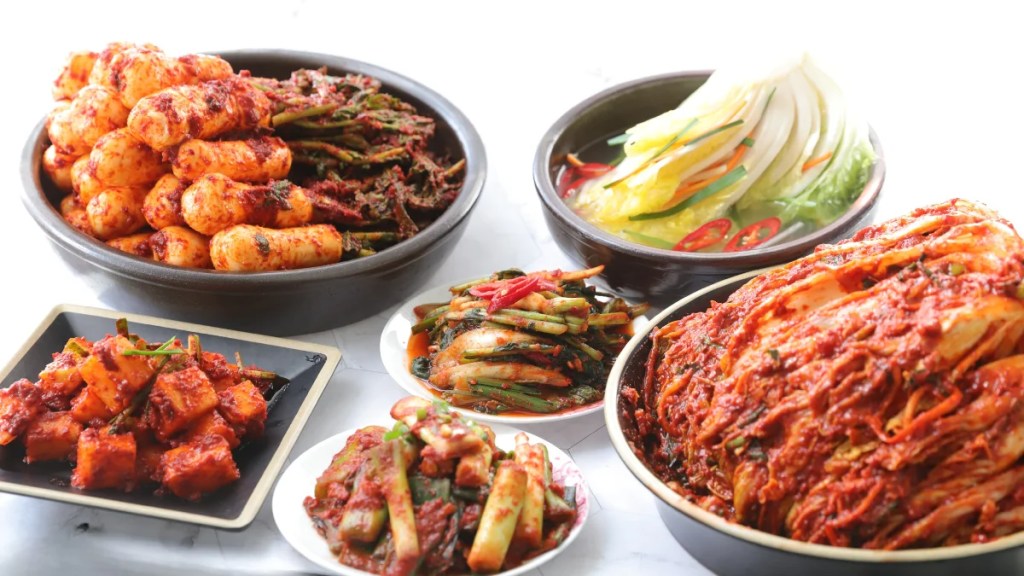
Most people picture napa cabbage when they think of kimchi.
But kimchi is not a single dish. It is an entire culinary category, spanning from crisp radish or cucumber to light water kimchi or mild white varieties made without chili. Grouping them all as “kimchi” is the same as calling Chablis, Châteauneuf-du-Pape, and Sauternes all “wine.”
Each variety tastes different depending on how long it matures. A freshly made kimchi, bright and snappy, is like a Beaujolais Nouveau straight off the harvest. Aged kimchi, deep and complex, is like a beautifully cellared wine.
These days, most Korean households keep a dedicated kimchi refrigerator. It maintains the precise temperatures needed to control fermentation, preserving crispness and peak flavor for months or even years. Think of it as the Korean equivalent of a proper wine cellar.
As kimchi ferments and matures, it develops a bold, complex aroma from garlic, salted seafood, chili, and layers of seasoning.
Even as Korean cuisine has gone global, Koreans remain conscious of that lingering scent, especially before an important meeting or a dinner out. It is much like the awareness people have around pungent cheeses, say, a Roquefort, a Gorgonzola, or a Camembert.

The Parallel Paths of Wine and Kimchi
Winemaking unfolds in three stages: what grows in the field, what happens in the cellar, and what time does afterward. Kimchi follows the same arc.
Terroir
There is a saying in winemaking: you can make bad wine from good grapes, but you can never make good wine from bad grapes. Ingredients are that important.
In wine, the grape sets the ceiling, shaped by climate, soil, and geography. In kimchi, the vegetable matters just as much, along with the salt and the seasoning paste.
Like grapes, cabbages from different regions carry distinct character. In the colder north of South Korea, cabbages grow slowly and develop dense, tightly packed leaves. In the warmer south, they grow fuller and softer. Along the coasts, briny air lends a mineral edge to the radishes and greens.
If that sounds familiar to wine lovers, it should. Think of a cool-climate Pinot Noir, a sun-drenched Rhône Grenache, or a saline coastal Albariño.
Terroir, it turns out, shapes kimchi as much as wine.
The cellar
Yogurt, cheese, wine, kimchi. These iconic fermented foods all operate on the same logic: humans set the conditions, and the microbes do the rest.
The raw ingredients already carry everything needed for their own transformation. Once the conditions are right, microbes convert sugars and proteins into acids, gases, and flavor compounds. The maker steps back, and fermentation takes over.
The aging
No one has ever rushed a great wine. The same is true for kimchi.
Once fermentation settles, time finishes the work. Sharp edges soften and separate flavors come together. Amino acids released from proteins produce the savory depth, umami. A well-aged Champagne and a well-aged kimchi arrive at the same place, given the same thing: time.
So what actually happens at each of these stages?
Inside Kimchi & Wine
First Crush & First Salt
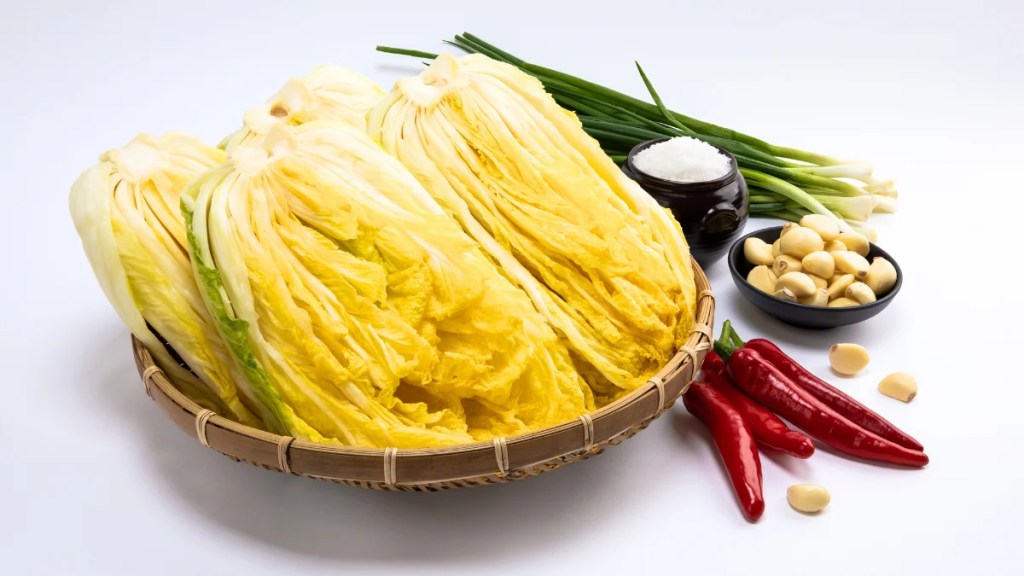
In a winery, as grapes are crushed, skins split, juice meets air, and yeasts begin their work. In a Korean kitchen, as cabbage is salted, the leaves soften and release their liquid, and bacteria begin to work.
Crushing and salting act the same way: they break the cell structure, draw out moisture, and soften the texture, creating the right environment for microbes to thrive.
Yeast drives primary fermentation in wine, while lactic acid bacteria lead the way in kimchi. These bacteria feed on the sugars in the cabbage and produce lactic acid. This lowers the pH, prevents spoilage, and creates that tangy, savory character.
That same family of bacteria also plays a role later in the winemaking process. During malolactic fermentation, they convert a wine’s sharp malic acid into softer lactic acid. This is what gives most reds their rounder texture and barrel-fermented Chardonnay its buttery depth.
Yeast & Bacteria
While yeast runs the fermentation from start to finish in wine, kimchi fermentation is more of a relay.
Early-stage bacteria (Leuconostoc) go first, producing the gentle fizz and bright acidity of young kimchi. As the environment grows more acidic, hardier strains (Lactobacillus) take over, building the deeper layers that define well-matured kimchi.
Yet both microbes take sugar down very different paths.
Yeast produces alcohol, carbon dioxide, and aromatic compounds that add layers of flavor to the wine. Lactic acid bacteria produce lactic acid, carbon dioxide, and organic compounds that give kimchi its tang, fizz, and richness.
Ageing & Maturation
The vessel is not just a container. It is an active participant in what happens next.
An oak barrel lets wine breathe through the grain of the wood. A concrete tank does the same through its porous walls. Slow oxygen exposure softens tannins, integrates flavors, and builds the rounder, more harmonious character.
The traditional Korean onggi works the same way. Its porous clay allows subtle gas exchange through microscopic pores, yet stays watertight, giving kimchi the conditions it needs to mature.
Today, the kimchi refrigerator does what that clay pot has done for centuries. It holds precise temperatures that let kimchi age at its own pace.
A young wine starts sharp and tannic. With time, tannins smooth out and flavors find their balance. A fresh kimchi starts crisp and bright. With maturation, its acidity deepens and its flavors integrate.
Terroir. Craft. Patience.
For anyone who loves wine, that may sound familiar. And anyone who loves kimchi knows that the same spirit lives inside the jar.
Two fermented worlds with almost nothing in common on the surface, yet the logic beneath them is identical: a dedication to great ingredients, unhurried process, and thoughtful care.
I love wine. For the same reason I love kimchi.
Wine. Flowers. The Art of Living Well.
© VinFloria · All rights reserved.
Leave a Reply