
In Part 1 of this guide, violet and rose opened the conversation — two florals that show up differently depending on the wine and the time it has had. Now, four more that take it further.
Four More Floral Notes in Red Wine
Each of these florals speaks of something more specific: the freshness of youth, the memory of a particular landscape, and one aroma that has nothing to do with the flower at all.
Peony
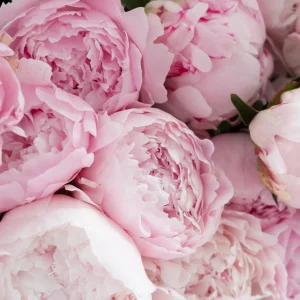
The scent of peony — a flower I’m personally fond of — is far from simple. It is rosy but lighter than rose, fresh before it is sweet, with just a hint of green underneath. Think of it as rose with the windows open.
That same character appears in wine because the compounds that make up a peony’s scent — such as linalool and geraniol — are already present in the grape skins. During fermentation, they are released from their chemical bonds and seamlessly woven into the wine.
Where to find peony
Peony appears most reliably in Pinot Noir, particularly from Burgundy and Oregon, where it settles alongside the red fruit like something that simply bloomed and stayed.
In Burgundy, whole-cluster fermentation — where grapes are fermented with their stems intact — is known to amplify these floral notes, contributing that faint green edge beneath the blossom.
You’ll find it in Champagne too, wherever Pinot Noir plays a leading role. The rising bubbles carry volatile compounds to the surface more rapidly, which is why peony in a Pinot Noir-forward Champagne can feel particularly vivid and lifted.
Unlike rose, which deepens beautifully with age, peony belongs entirely to a still red wine’s youth—and it’s often the very first floral note to fade as aging ushers in tertiary aromas.
However, in long-aged prestige cuvée Champagnes, this delicate floral note is preserved away from oxygen alongside the lees, allowing it to bloom with surprising freshness even in old vintages — a fascinating nuance I’ve come to discover through my deep love for Champagne.
Where rose carries structure and definition, peony is more relaxed, more generous. It makes a wine feel welcoming rather than dramatic.
Lavender

Lavender’s scent is sweet and floral, with a cool, faintly medicinal edge and a soft powdery finish — familiar enough to recognize instantly, complex enough to keep you interested.
Lavender in red wine is not just a floral note. It is a sense of place.
In the south of France, a vast, wild ecosystem known as garrigue has shaped the landscape for centuries — a sun-bleached terrain of stones and dry soil where wild lavender, thyme, rosemary, sage, and low shrubs grow freely. The vineyards sit right in the heart of this untamed wilderness.
The vines and the wild herbs share the same dry, mineral-rich land, breathing the same air. Science confirms this: volatile oils from surrounding plants cling to the bloom on grape skins and embed themselves into the wine’s chemistry. And that landscape comes through in the glass.
Where to find lavender
Grenache, Syrah, and Mourvèdre blends from the Southern Rhône carry lavender as something absorbed from the landscape itself.
In appellations like Châteauneuf-du-Pape, Gigondas, or Bandol, that herbal thread is part of what makes the wine feel so rooted in its place. That is what terroir actually means — not a marketing term, but a landscape reaching through the grape and into the glass.
Beyond Southern France, lavender appears in Malbec from Mendoza, Tempranillo from Rioja, Barbera from Piedmont, and Petit Verdot in Bordeaux blends. In each case, the aroma reads less as floral sweetness and more as a cool herbal lift — subtle but pleasantly present.
Hibiscus
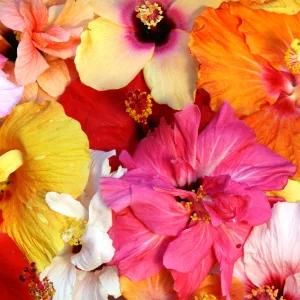
The hibiscus flower is hard to miss. Its large, trumpet-shaped blooms in deep red and pink are dramatic enough to stop you in your tracks in any garden.
Yet, the scent we find in wine comes from the dried calyx rather than the fresh blossom, the very one that infuses tea water with a deep crimson hue and a vivid, mouth-watering tartness.
If you have ever sipped hibiscus tea, widely known as agua de jamaica across Latin America, you already recognize this distinctive note. That tart, jewel-toned character of cranberry, pomegranate, and dried rose hip translates directly into the glass, bringing both vibrant acidity and a hauntingly beautiful floral crimson to the wine.
Where to find hibiscus
You’ll find it in lighter, brighter reds — Gamay from cooler sites and Sangiovese with its natural tartness and lift. This floral note tends to surface where the wine is vibrant and the fruit stays clean.
Hibiscus has become a valued descriptor in contemporary tasting notes. When a lighter red is bright and fruit-forward with that clean, tart energy, this is often what’s emerging in the glass.
Iris

Of all the floral notes in red wine, iris has perhaps the most unexpected story.
As a florist, I have spent years working with iris — arranging them for others and enjoying them in my own garden. In reality, the flower has almost no scent, just a delicate, cool edge that is easy to miss. So when iris kept appearing in serious tasting notes, it genuinely puzzled me.
The iris aroma in wine has nothing to do with those beautiful blooms. The secret lies in the root, known as orris. The fragrance only appears after the rhizomes have been harvested and carefully dried for three to five years.
What emerges is an earthy, powdery cool—faintly reminiscent of violet, but with an added layer of depth that unfolds with more weight.
Orris remains one of the most prized ingredients in luxury perfumery, anchoring many of the world’s finest fragrances with its elegant complexity.
Where to find iris
In wine, iris signals something specific: structure, restraint, and patience. While this noble note occasionally whispers from a well-crafted Pinot Noir or a northern Rhône Syrah, it finds its most beautiful expression in Italy’s great aged reds: Nebbiolo from Piedmont and Sangiovese from Tuscany.
You will most notably find it in mature Barolo, Barbaresco, and Brunello di Montalcino — wines with enough age to show what was always there
Drier and weightier than violet, it is an aroma that rewards those who linger over their glass, tasting with a slow, patient breath.
Getting the Most Out of Floral Notes in Red Wine
Temperature and time
When red wine is enjoyed just slightly below room temperature, dominant layers like aggressive alcohol and heavy notes soften, creating the perfect space for delicate floral notes to step forward.
Give the glass a gentle swirl, and pause. Floral notes in red wine don’t rush to the surface the way they do in white. They sit beneath fruit, oak, and spice.
As those dominant layers open up, florals like violet, peony, or dried rose begin to show through.
The right glass
For floral reds like Pinot Noir and Nebbiolo, a Burgundy-style bowl is particularly well suited — wide at the base and gently tapered toward the rim.
The wider surface area allows more volatile compounds to rise, while the narrowing rim concentrates them toward the nose. This matters for wines where the florals are delicate.
How floral notes shift with age
Young wines tend to show fresh, vivid florals — violet in a Cabernet, bright rose in a young Nebbiolo. As a wine matures, those fresh notes gradually transform. The violet softens. The rose dries into something more subdued, more layered.
What arrives in a young wine as a living flower becomes, with time, something closer to a dried one.
Iris, however, is a rare exception. Its true nobility reveals itself almost exclusively in matured wines, appearing only after time has allowed every other element to settle into place.
At the table
Floral red wines pair well with dishes that echo their aromatic character — herb-roasted poultry, mushroom-based dishes, and braised meats with simple sauces.
A A floral Syrah with rosemary-roasted lamb is a classic combination for good reason. The herbal notes in both the wine and the dish complement each other naturally.
Heavily spiced or very rich dishes tend to push the florals into the background. If you’re opening a bottle for its floral character, try to pair it with something that gives it room.
Six Flowers, One Glass
From violet’s first flash to the slow reveal of iris, these floral notes in red wine have always been there. Now you know how to find them.
The next glass you pour, give it a moment before the first sip. You might be surprised at what you notice.
*Missed Part 1? 6 Floral Aromas in Red Wine — Part 1
*New to the series? Start from the beginning: 7 Floral Aromas in White Wine
Wine. Flowers. The Art of Living Well.
© VinFloria · All rights reserved.
Leave a Reply