
You’ve been invited to dinner. Knowing your hosts love wine, you decide to bring a bottle chosen with their palate in mind. After browsing for quite a while at the wine shop, you finally find the one that feels just right.
You walk in, bottle in hand and feeling pretty good about your pick, only to spot a row of wines from other guests already lined up on the table. It’s that slightly deflating moment when a thoughtful gift becomes just one of many.
There’s a way to make your gift more personal: show them the wine’s aromas along with the bottle.
Here are five wine and flower gift pairings to show you how.
Wine and Flower Pairings?
Food and wine pairing is familiar, but a wine and flower pairing? That may sound a little unusual.
As a florist and wine lover, though, I find myself thinking about flowers and wine as often as food and wine. It’s a pairing that never stops intriguing me.
When I ran my flower shop, customers ordering flowers for dinner parties or events would sometimes mention the wine being served. When they did, I would think about its aromas and add a few extra roses or sprigs of lavender that echoed them.
Wine owes much of its floral character to a simple fact: flowers and grapes share the same aroma compounds. Geraniol, the scent of roses, and linalool, the scent of orange blossom, for example, are found in both flower petals and grape skins.
If you know the scent of green apple, you’ll pick it out more easily in a glass of Champagne. Flowers work the same way. Once you know a flower’s scent, you’ll catch it more readily in wine.
So giving a wine with its matching flower is like offering a richer way to enjoy it. Few gifts could mean more to a wine lover.
5 Wine and Flower Gift Pairings
To start, I’ve chosen five wines that are easy to love: Riesling, rosé Champagne, Pinot Noir, Chianti Classico and Cabernet Sauvignon from Napa and Sonoma. Each comes with two picks: a Collector’s Choice worth cellaring and a Wine Lover’s Choice any enthusiast will be happy to open.
Each flower either shares its wine’s aromas or reflects its character, and you’ll find all of them at most flower shops.
Riesling × Spirea

Bottles to Bring
- Collector’s Choice: Trimbach, Riesling Cuvée Frédéric Emile (Alsace, France)
The other flagship of Trimbach, the house behind the rare Clos Sainte Hune. Frédéric Emile is a beautiful Riesling from vines averaging 45 years old in Ribeauvillé’s two grand cru vineyards, Osterberg and Geisberg. - Wine Lover’s Choice: Dönnhoff, Riesling Trocken (Nahe, Germany)
A dry Riesling from Dönnhoff, one of Germany’s top Riesling producers. Clear floral notes rise over citrus and peach, and it offers Dönnhoff’s craftsmanship at a friendly price.
Blooms to Bring
Tasting notes for Riesling usually mention citrus blossom (lemon, lime, and orange), honeysuckle, and acacia. Unfortunately, none of these are easy to find at a flower shop, so for years I wondered which flower I could recommend with Riesling. Then one day it came to me: spirea. I was thrilled.
Available at flower markets from around February to early spring, spirea is a graceful flowering branch, with tiny white blossoms lining its slender stems. Lean in, and you’ll notice a delicate sweetness and the fresh green note of the stems.
The thin, springy branches recall Riesling’s light, lively acidity. The tiny blossoms echo the white-flower notes in the glass. In shape and in scent, few flowers suit Riesling better.
Even placed simply in a tall vase, spirea carries an effortless elegance. After the petals fall like snowflakes, fresh green leaves appear, so the branches stay lovely long after the bloom. Its longevity is much like Riesling’s.
When spirea is out of season, waxflower or another small white bloom makes a good substitute.
Rosé Champagne × Peony

Bottles to Bring
- Collector’s Choice: Perrier-Jouët, Belle Epoque Rosé (Champagne, France)
Japanese anemones painted by Art Nouveau master Émile Gallé wrap around the bottle, making it a bouquet in itself. This vintage rosé blends Pinot Noir and Chardonnay with a little Meunier, with notes of peony, cherry blossom and rose petal. The house’s cellar master has compared it to a pale pink ranunculus. - Wine Lover’s Choice: Ayala, Rosé Majeur (Champagne, France)
A rosé from Ayala, Bollinger’s sister house, run by the same family. Chardonnay leads the blend, with Pinot Noir and Meunier, for a style that is delicate and pure. Peony, wild rose, and a touch of iris come first, followed by raspberry and cherry.
Blooms to Bring
Rosé Champagne offers red fruit like strawberry, cherry, and raspberry, and its delicate floral notes are often compared to peony.
Most rosé Champagnes are crafted by blending a measured amount of red wine into a white base wine. Some houses use the saignée method instead, steeping red grape skins for a few hours to a few days to draw out color and aroma.
A peony’s soft blush pink captures the elegance and romantic charm of rosé Champagne. And as it opens from a tight bud, unfolding a little more each day, it mirrors the bubbles that keep rising in the glass.
When peonies are out of season, pink ranunculus, with its layered petals, serves as a lovely alternative.
Pinot Noir × Rose

Bottles to Bring
- Collector’s Choice: Joseph Drouhin, Chambolle-Musigny 1er Cru Les Amoureuses (Burgundy, France)
The vineyard, Les Amoureuses (“the lovers”), lies just below the grand cru Musigny and is considered the finest premier cru in Chambolle-Musigny, valued on par with the grand crus. Rose petal and peony rise over raspberry and cherry. Drouhin farms its own vineyards organically, and the wine shows pure fruit and a silky texture. - Wine Lover’s Choice: Soter Vineyards, Planet Oregon Pinot Noir (Oregon, USA)
A Willamette Valley Pinot Noir that opens with rose petals. Tony Soter, a renowned Napa consultant and winemaker, founded the estate. The wine comes from certified sustainable grapes, and the cool Willamette climate keeps it fresh and aromatic.
Blooms to Bring
Pinot Noir has thin skins, so its wines are relatively light in color. Wine lovers prize this delicate red for its perfume-like aromas, and rose petal is its signature scent.
Many commercial cut roses have been bred for vase life and, sadly, have lost much of their fragrance. Since scent is the point of this pairing, try to choose more fragrant ones, or garden roses with full, layered petals and an elegant fragrance.
For a close friend, a small packet of rose petals makes a charming gift. A potted miniature rose instead of a bouquet is another good choice.
Chianti Classico × Iris
Bottles to Bring
- Collector’s Choice: Fontodi, Vigna del Sorbo Chianti Classico Gran Selezione (Tuscany, Italy)
A Sangiovese-based wine from Vigna del Sorbo, an organically farmed single vineyard. It lies in the Conca d’Oro (“golden basin”), just below the village of Panzano in Chianti Classico. Gran Selezione is the top tier of Chianti Classico. Vigna del Sorbo shows violet over black cherry and plum.
(Would you believe one of the best views of the valley is from the children’s playground in the center of Panzano? Kids here ride the slide with that view in front of them. An everyday sight for locals, a showstopper for visitors.) - Wine Lover’s Choice: Castello di Volpaia, Chianti Classico (Tuscany, Italy)
Made from organically grown grapes around a medieval walled village in Radda in Chianti, at up to 600 meters (about 2,000 feet). The altitude gives it cool-climate elegance, making it lighter and more fragrant than fuller-bodied Chiantis.
Blooms to Bring
Chianti Classico is made mainly from Sangiovese, Tuscany’s signature native grape. Red cherry, herbs, and earth meet dried rose and purple florals like violet and iris. That’s classic Sangiovese.
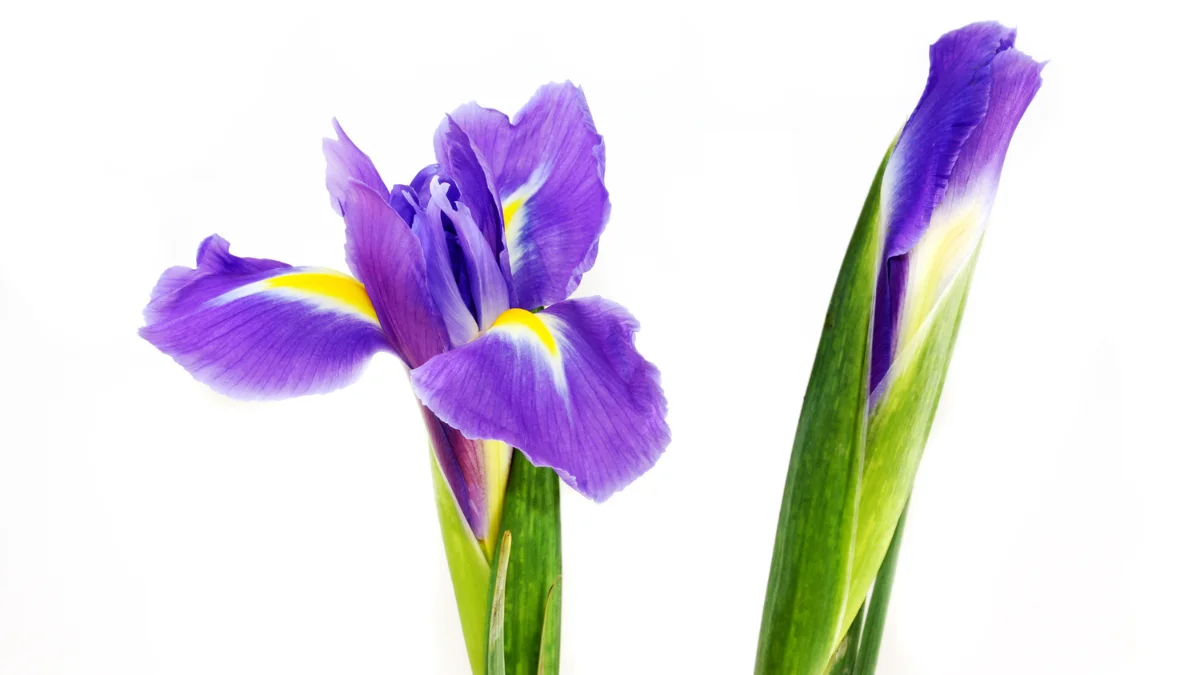
As a florist, I often wondered why iris shows up in wine tasting notes when fresh irises have so little scent. Later I learned that the iris note in wine and perfume refers not to the flower but to its dried root, known as orris. Orris has a powdery, violet-like scent prized by perfumers.
In San Polo in Chianti, a village in the Chianti Classico region, irises (giaggiolo in Italian) bloom all around, and every May the village holds an iris festival, the Festa del Giaggiolo.
The irises at flower shops are a different species from those in Chianti, but they still bring to mind Sangiovese’s aromas and the landscape it comes from.
Napa & Sonoma Cabernet Sauvignon × Potted Mint

Bottles to Bring
- Collector’s Choice: Heitz Cellar, Martha’s Vineyard Cabernet Sauvignon (Napa Valley, USA)
Napa’s first single-vineyard Cabernet Sauvignon. The vineyard lies at the foot of the Mayacamas Mountains and the wine is 100% Cabernet. Vivid mint from the surrounding eucalyptus rises over black currant and black cherry. - Wine Lover’s Choice: Beringer, Knights Valley Cabernet Sauvignon (Sonoma County, USA)
Cherry, mint, and rose petal come together in this Cabernet. Beringer, based in St. Helena in Napa Valley, has farmed its Knights Valley vineyards in Sonoma for decades. Warm days and cool nights give the wine both ripe fruit and freshness.
Blooms to Bring
Cabernet Sauvignon is a full-bodied red with aromas of black fruit, cedar, and herbs. Napa and Sonoma Cabernet sometimes shows a hint of mint. One study found that the closer vines grow to eucalyptus trees, the more of the trees’ aroma compounds end up in the grape skins, and the stronger the minty note in the wine.
A small potted mint works best, ordered ahead at a local flower shop or picked up at a garden center. Kept on a kitchen windowsill, it gives you fresh leaves for tea or cooking. That’s the joy of growing herbs in small pots.
Rub a mint leaf and get to know its scent first. It will help you pick up the same note in the wine.
A Florist’s Tips for Styling Your Wine Gift
- Match the flowers to the wine’s color: blush peonies with rosé Champagne, red roses with Pinot Noir.
- Take your cue from the label: jute twine, matte kraft paper, colored paper or sheer organza ribbon, chosen to suit its look and feel.
- Choose buds over full blooms: they open slowly and last longer.
- Keep the bouquet to five to ten stems: just enough to balance the bottle.
- Avoid strongly scented flowers: so they don’t mask the wine’s delicate aromas.
- Add a few words: on a card or in person, something like, “Look for the scent of roses in this wine.”
Creating a Wine and Flower Gift for Wine Lovers
Beyond the five pairings above, why not create your own wine and flower gift?
You might pair a Provence rosé with a bundle of dried lavender, or a Chenin Blanc with a small pot of chamomile. Along the way, you’ll look more closely at the wine and discover the floral notes hidden in its glass.
So, how does a wine and flower gift pairing sound? I hope it now feels perfectly natural.
* More wine and flower pairings to come.
Wine. Flowers. The Art of Living Well.
© VinFloria · All rights reserved.
*VinFloria — Wine educator, writer and floral designer. Based in California, she travels to wine regions around the world, sharing stories of wine, flowers and living well. More about the author →