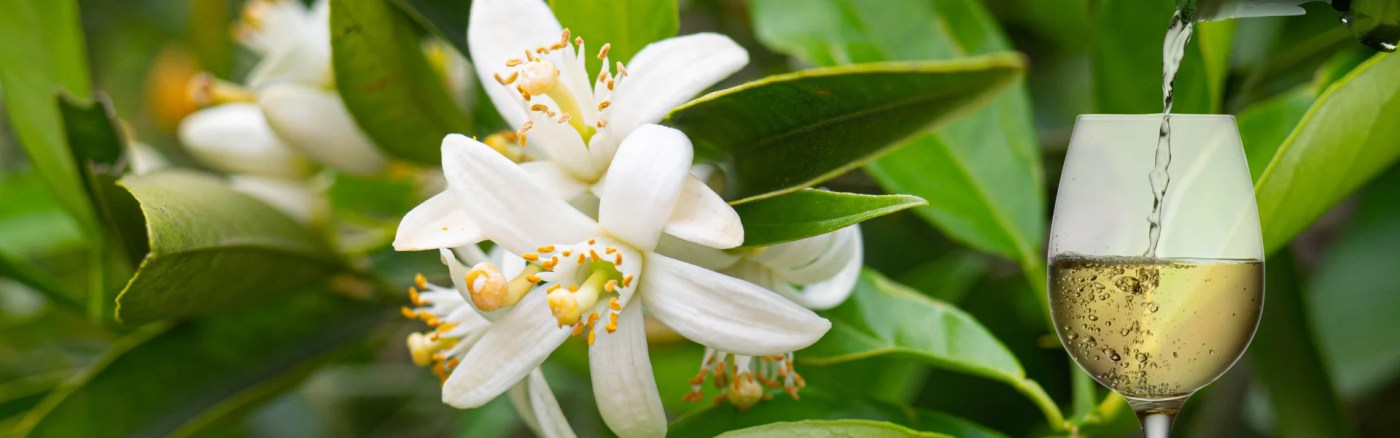
Fresh and lovely rose. Sweet and creamy jasmine. Cool and green elderflower.
You might guess a garden in full bloom, but it’s actually the wine glass in front of you.
As a florist, these scents are a familiar pleasure. And yet, finding them in a glass of wine brings a completely different kind of joy.
The flowers we love, blooming as fragrance in wine — there’s something genuinely wonderful about that, isn’t there? So where do these floral aromas actually come from, and which flowers are we exactly talking about??

Why Wine Carries Floral Aromas
Floral aromas in white wine are not a romantic fantasy. They are the pure work of chemistry, and at the heart of it is a simple truth: flowers and grapes share many of the same aromatic compounds.
Take the rose. Its scent comes from a compound called geraniol, naturally present in the petals. That very same compound exists in the skin of grape varieties the world over.
When fermentation begins, the molecular seal breaks. The aromatic compounds locked inside the grape are released into the liquid, carrying with them the essence of rose, jasmine, and orange blossom..
No added fragrance. Just the grape, the soil, and the invisible chemistry of nature doing its extraordinary work. Some wines wear it as a bold signature, while others show it as a whisper beneath the fruit aromas.
Not every variety contains enough of these aromatic compounds to produce them. That’s simply the nature of the grape. But when floral notes do come through clearly, they tell you something: the winemaking was careful — cool fermentation, gentle handling — and the wine has kept its integrity from vineyard to glass.
So when someone says, “I smell jasmine,” it’s not pretension. They are pointing to something real — a compound their nose has actually detected. Once you know that, the way you experience wine changes.
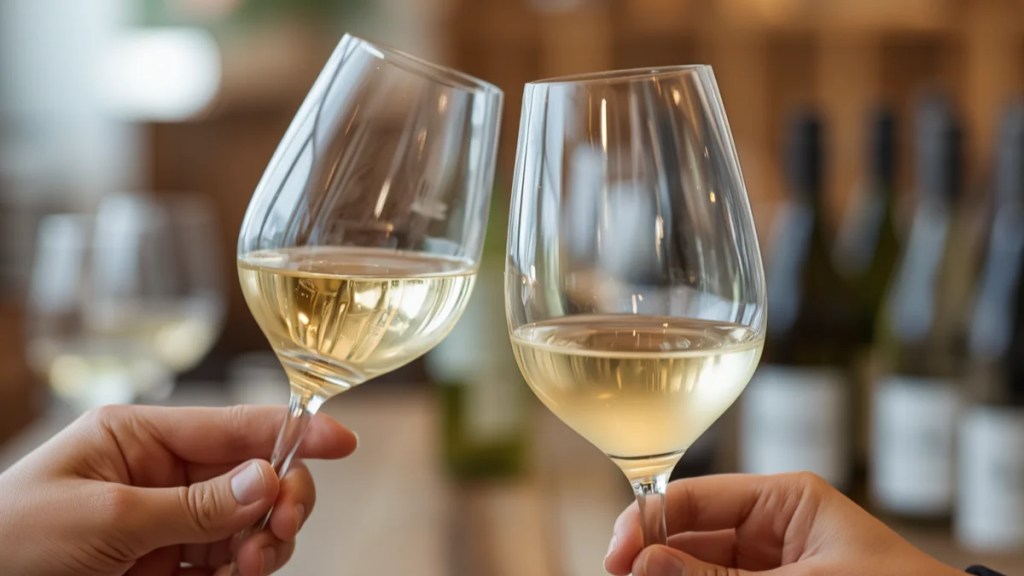
How to Actually Smell Wine
Smelling wine well is a skill, built through practice and attention, not something you’re born with.
Before you swirl, just listen
Unlike red wine, where floral notes develop slowly as the wine opens up, white wine florals are highly volatile — they rise from the glass quickly and are most present before anything disturbs them.
Lean in gently before you swirl. Don’t try to name what you’re smelling just yet. Simply receive it. Then swirl lightly, and let the second wave come to you.
Keep your mouth slightly open when you smell
Breathing through both your nose and mouth simultaneously gives aromatic molecules two pathways to reach your olfactory receptors, effectively doubling the signal.
The difference is immediate. Try it once alongside your usual closed-mouth sniff, and you’ll feel it straight away.
After you sip, draw air through the wine
Take a sip and hold the wine in your mouth. Purse your lips slightly and draw a little air in, letting it aerate the wine on your palate, then exhale gently through your nose.
What comes through in that moment can surprise you — richer, more layered, and sometimes entirely different from your earlier perception.
Give your nose a moment to reset
Olfactory fatigue sets in faster than you’d expect. It’s something I’ve come to realize over years of working with flowers, especially.
When I unpack a box of roses for conditioning, the scent fills the room immediately — but a little later, I barely register it anymore. Most people have experienced the same thing.
This is exactly what happens in the glass. Once it sets in, step away for a moment, breathe some neutral air, or simply breathe over a glass of still water. It clears the slate surprisingly well.
A glass of filtered water on the tasting table is worth more than it seems. Alcohol gradually dries the nasal membranes, slowly dulling your sensitivity. Staying hydrated keeps the nose sharp, and your body will thank you for it.
In short: first nose still → swirl → second nose with mouth slightly open → sip → draw air through the wine → exhale through the nose. The rest is just paying attention.
Floral Aromas in White Wines
Now that your nose is ready, here’s what to look for.
Rose

The most iconic floral note in wine, and the one that tends to stop people mid-swirl the first time they truly pay attention.
The compound behind it, geraniol, lives in grape skins across many varieties. But it expresses itself with almost theatrical clarity in Gewürztraminer — a grape whose very name means “spiced Traminer” in German, a hint at just how assertive its aromatics can be.
A well-made Alsatian Gewürztraminer can smell so precisely of rose water that it feels less like wine and more like a perfume memory.
Muscat varieties carry it beautifully too, a little softer, a little rounder. Torrontés from Argentina brings a more exuberant, perfumed version, while Pinot Gris tends to carry it quietly, woven gently beneath the fruit.
The same rose, wearing a different face in every glass. That’s part of what makes it worth looking for.
Jasmine

Where rose is direct and perfumed, jasmine is warmer and more exotic — sensual, with a depth that unfolds slowly.
Viognier is its most natural home. Rich with stone fruit — apricot, white peach — and threaded through with jasmine, it’s a grape so intensely aromatic that you often smell it before the glass reaches your nose. The texture is distinctive too: fuller and creamier than most white wines, with a presence that carries well past the first sip.
Its spiritual home is Condrieu, a small appellation in the northern Rhône Valley — a region that also produces some of France’s most celebrated Syrah. Viognier once came close to disappearing entirely, but dedicated producers held on, and today it stands as the north Rhône’s defining white.
California’s Paso Robles and Central Coast produce beautiful Viognier too — more fruit-forward than the Rhône, but with the jasmine character very much intact.
Argentina’s Torrontés is another beautiful introduction to this note, generous with its florals and considerably easier on the wallet. When I want to show someone what floral aromas in white wine actually smell like, this is often the bottle I reach for first.
Elderflower
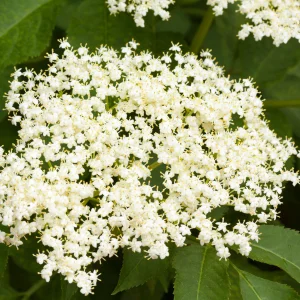
Elderberry has become increasingly familiar in North America through health products and supplements, but the variety grown here has a noticeably different fragrance from its European counterpart.
The elderflower behind this wine aroma is the European variety. Its small cream-white blossoms are delicate to look at but surprisingly bold in scent. Cool, green, and faintly creamy — with a sweetness that feels light and clean rather than rich or heavy. It’s the kind of fragrance that arrives before you’ve even thought to look for it.
In wine, it shows up most reliably in Sauvignon Blanc — a grape whose skin carries the same monoterpenes that give elderflower its distinctive scent. The one from New Zealand tends to announce it boldly, fresh and bright. The Loire Valley styles, like Sancerre, carry it more quietly, woven into the mineral character of the wine.
Riesling and Gewürztraminer from Alsace express it with greater depth, the floral note deepening alongside the natural richness of those grapes.
And Austria’s Grüner Veltliner offers its own version — here elderflower weaves through white pepper and lime with an almost herbal quality, cool and precise.
To Be Continued
Three flowers down — rose, jasmine, and elderflower. Each one distinct, each one worth returning to the next time you pour a white wine.
In Part 2, four more florals that are genuinely worth knowing — lily of the valley, orange blossom, honeysuckle, and acacia — along with practical tips for getting the most out of every floral white wine you open.
▶ Continue reading: 7 Floral Aromas in White Wine — Part 2
WSET is an excellent place to explore further.
Leave a Reply